
News
Keep pace with Yuezhan, know the latest developments of rotomolding industry and our company.
Rotomolding
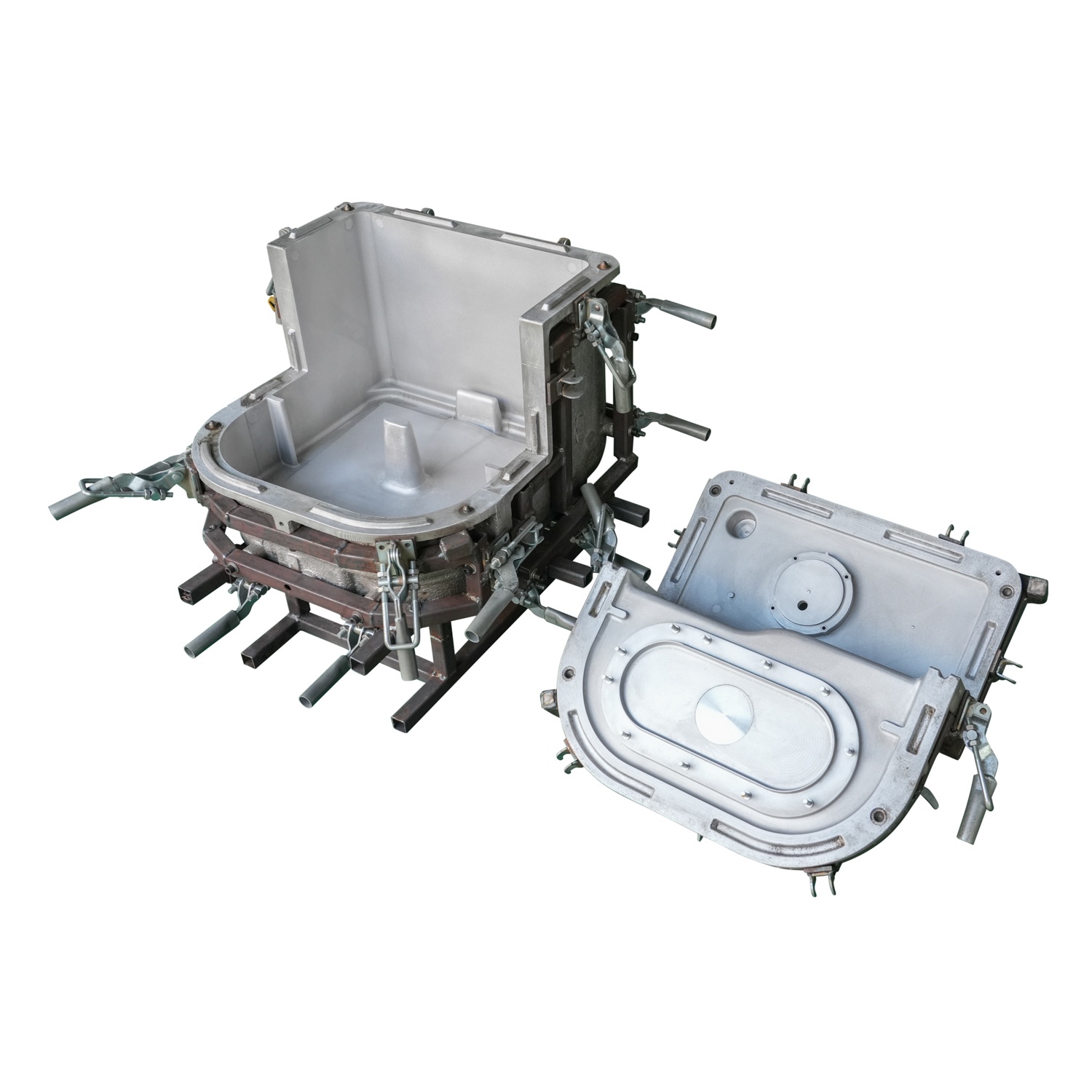
As Rotational Molding gains traction for its design flexibility and low tooling costs, stakeholders—from Rotomold operators to procurement teams and enterprise decision-makers—are increasingly scrutinizing its sustainability claims. While Rotational Mold processes often highlight recycled resins and reduced energy use versus injection molding, real trade-offs around material performance, cycle time, and end-of-life recyclability remain underexplored. This article cuts through the greenwashing noise, examining how Rotational Moulding, Roto Mould, and Rotomolding Product development intersect with genuine environmental impact—helping users and buyers make informed, future-ready choices.
What Do “Sustainable Rotomolding” Claims Actually Mean?
The term “sustainable rotomolding” appears frequently in marketing materials—but rarely with technical specificity. Unlike thermoplastics processed via extrusion or injection, rotational molding relies on slow, oven-based heating of powdered resin inside a rotating mold. Its sustainability narrative typically rests on three pillars: use of post-consumer or post-industrial recycled polyethylene (rPE), lower per-part energy draw than high-pressure alternatives, and suitability for large, hollow parts that reduce material waste.
Yet industry benchmarks reveal nuance: typical rPE content in commercial rotomolded tanks ranges from 15%–40%, not 100%. Full substitution remains limited by thermal degradation, melt flow inconsistency, and long-term UV resistance loss. Energy use per kilogram of finished part averages 3.2–5.8 kWh—lower than injection molding’s 6.5–9.0 kWh/kg, but higher than blow molding’s 2.0–3.5 kWh/kg for comparable geometries.
Crucially, sustainability isn’t just about inputs—it’s about system-level outcomes. A rotomolded chemical storage tank may last 20+ years with zero maintenance, while an equivalent welded HDPE unit may require seam inspection every 3–5 years. Lifecycle assessment (LCA) data from the Plastics Industry Association shows that for parts >50 L volume, rotomolding reduces embodied carbon by 18–22% over 10-year service life—provided rPE is sourced within 300 km and end-of-life collection infrastructure exists.
Recycled Resin Performance: Trade-offs You Can’t Ignore
Not all recycled resins behave the same in rotational molding. Post-consumer rPE (PCR-PE) introduces variability in molecular weight distribution, contaminant load (e.g., adhesives, labels, food residues), and oxidation history. These factors directly affect sintering behavior, bubble formation, and final wall uniformity. Operators report 12–18% longer cycle times when shifting from virgin LDPE to 30% PCR-PE blends—due to slower heat penetration and inconsistent particle fusion.
Mechanical performance also shifts: tensile strength drops 7–11%, elongation at break falls 15–25%, and impact resistance at –20°C declines by up to 30%. These changes matter most for applications requiring pressure rating (e.g., water tanks rated to 1.0 bar), UV exposure (e.g., outdoor playground equipment), or chemical resistance (e.g., agricultural spray tanks).
Procurement teams should request full resin datasheets—not just “contains recycled content”—including MFI (Melt Flow Index) range, ash content (<0.3% preferred), and ASTM D1248 compliance. For critical applications, insist on third-party testing per ASTM D1922 (tear resistance) and ASTM D792 (density consistency).
Energy Use Realities: Oven Efficiency ≠ System Sustainability
Where Energy Is Spent—and Where It’s Hidden
Rotomolding ovens consume 65–75% of total process energy. But system-level efficiency depends heavily on mold design, loading density, and thermal recovery. Modern convection ovens achieve 45–55% thermal efficiency—versus 30–40% for older direct-fired units. However, auxiliary systems (cooling towers, compressed air for mold rotation, exhaust scrubbers) add another 12–18% to total site energy draw.
Operators often overlook the “idle energy penalty”: standard ovens maintain 150–200°C standby temperature between cycles, consuming 1.2–2.0 kW/h continuously. Switching to programmable idle modes (e.g., dropping to 80°C during 2-hour breaks) cuts this by 60–70%. For a 3-shift facility running 22 days/month, that translates to ~4,200 kWh saved annually—enough to power 3–4 rotomolding cells for one week.
- Verify oven thermal efficiency certification (per ASTM E2797 or ISO 50001-aligned audit)
- Require documented cooling cycle duration (target: ≤25 minutes for 10-mm wall parts)
- Confirm exhaust filtration specs—especially for flame-retardant or halogenated resins
- Assess mold material conductivity: aluminum molds cool 22–30% faster than steel, reducing cycle time and energy per part
End-of-Life Recyclability: The Critical Gap
Rotomolded parts are rarely recycled—not because they can’t be, but because collection logistics and sorting infrastructure lag. Unlike injection-molded consumer packaging, rotomolded products (e.g., septic tanks, marine buoys, playground components) are installed in-situ, making retrieval costly. Less than 8% of rotomolded PE parts enter formal recycling streams globally (PlasticsEurope 2023 Recycling Survey).
Design for disassembly matters: multi-material assemblies (e.g., metal inserts, rubber gaskets, painted surfaces) increase contamination risk during grinding. Parts with ≥95% monomaterial composition, no surface coatings, and wall thickness ≥4 mm show >85% regrind yield in pilot-scale trials. That’s why forward-thinking manufacturers now specify “recyclability-first” design rules—including standardized fastener types, removable hardware, and color-coding per polymer family (e.g., blue = HDPE, yellow = LDPE).
For procurement leaders, ask suppliers: Do they track regrind usage rates? Is their scrap diverted to certified recyclers (e.g., R2 or e-Stewards)? Can they provide EPDs (Environmental Product Declarations) aligned with ISO 14040/44 and EN 15804?
Why Partner With a Rotomolding Specialist for Sustainable Sourcing?
Generic resin suppliers won’t optimize for your specific part geometry, production volume, or regional end-of-life infrastructure. A true rotomolding partner brings cross-functional expertise: material scientists who qualify rPE batches against ASTM D1248 Class I/II specs; process engineers who model thermal profiles for 30% energy reduction; and sustainability leads who map circular pathways—from take-back programs to closed-loop regrind agreements.
We support your sustainability goals with actionable deliverables: validated rPE blend recommendations (with mechanical test reports), oven retrofit assessments (ROI modeled over 24 months), and recyclability scoring for new product designs (using our 12-point DfR checklist). Contact us to discuss your next rotomolding project—including resin selection, energy benchmarking, or EPD development.